Rosacea is one of the most common chronic skin conditions in the world, yet it's also one of the most misunderstood and frequently misdiagnosed. If you've been living with persistent facial redness, recurring flare-ups, and the sinking feeling that nothing is working, you're not alone.
The good news? Rosacea is manageable. With the right rosacea treatment plan, most people can significantly reduce symptoms, control flare-ups, and feel confident in their skin again. Here's what you need to know.
Important Note: This article is intended for educational purposes only and does not constitute medical advice. Please consult a qualified healthcare provider for diagnosis and personalized treatment recommendations.
What Is Rosacea?
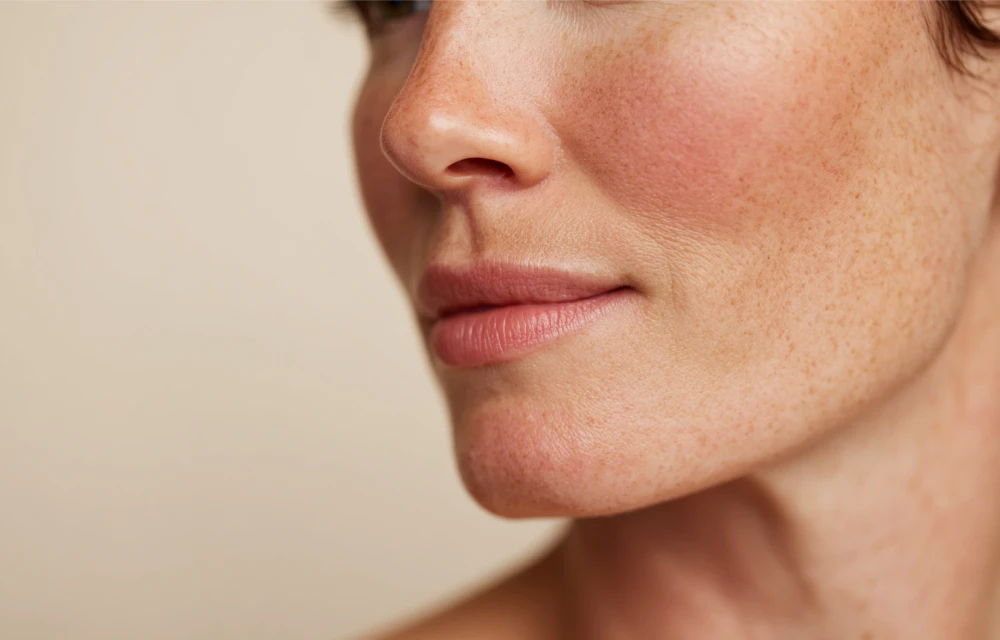
Rosacea is a chronic skin condition, not just occasional flushing or a temporary rash. It's characterized by:
- Persistent facial redness and visible blood vessels
- Acne-like bumps and pustules are commonly mistaken for a regular breakout
- Skin sensitivity concentrated on the nose and cheeks, though the forehead and chin can be affected too
Rosacea is not acne. This distinction matters because treating rosacea with standard acne products can significantly worsen symptoms. Accurate diagnosis is the foundation of effective treatment.
Rosacea also presents in four subtypes: erythematotelangiectatic (redness and flushing), papulopustular (acne-like bumps and pustules), phymatous (skin thickening, often around the nose), and ocular (affects the eyes). While it can affect all skin types, rosacea is most commonly diagnosed in fair-skinned individuals.
Rosacea Symptoms: What to Look For
Rosacea looks different from person to person, but the most common signs include:
- Persistent facial redness (erythema), especially across the nose and cheeks
- Frequent flushing or blushing triggered by heat, food, or emotion
- Visible blood vessels (telangiectasia)
- Bumps or pustules that resemble acne but aren't
- Skin that feels hot, sensitive, itchy, or tight
- In more advanced cases: ocular rosacea (eye redness and irritation) or rhinophyma (thickening of skin on the nose)
It's also worth clarifying what rosacea is not: it is not contagious, and it is not caused by poor hygiene.
Common Rosacea Triggers
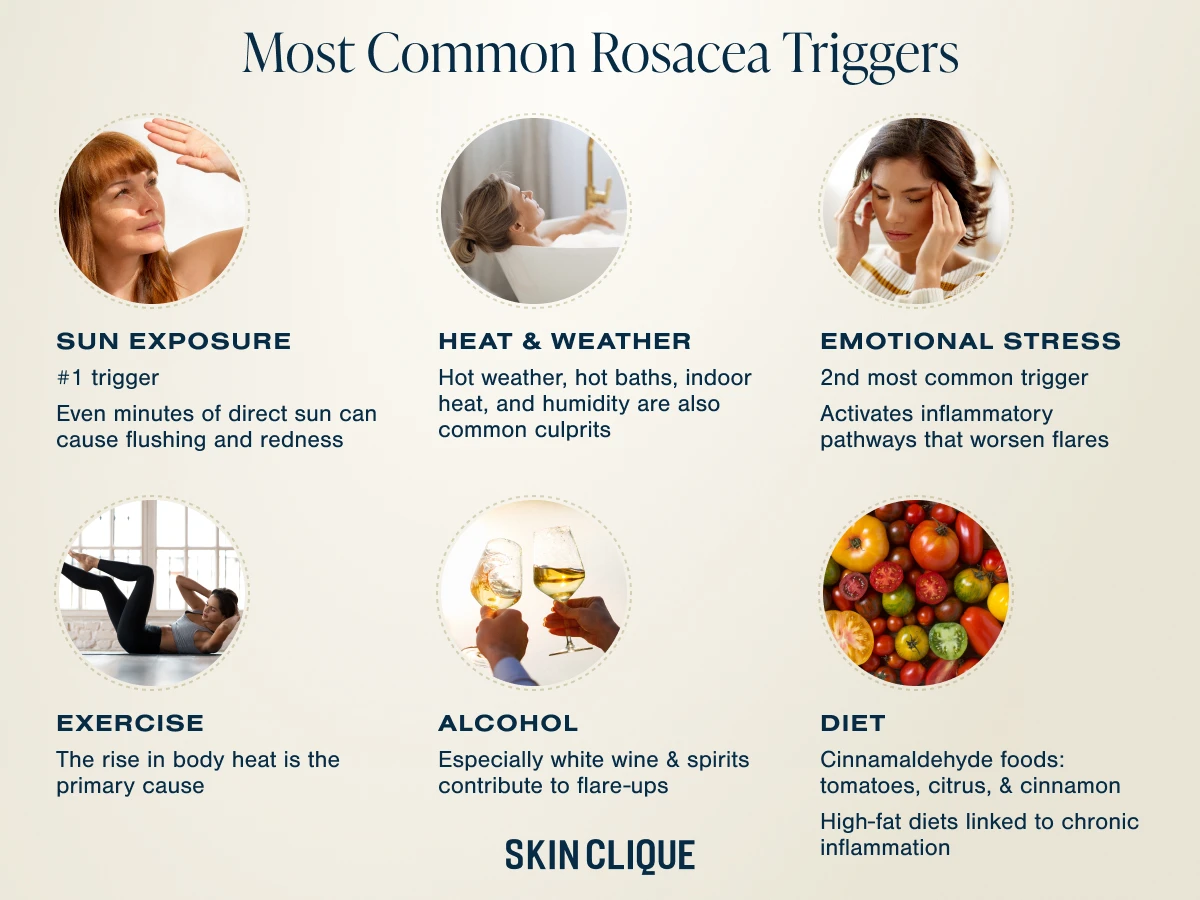
Triggers are highly individual, but some of the most common include:
- Sun exposure — one of the most significant and consistent triggers across all subtypes
- Heat — hot weather, hot drinks, saunas, hot showers
- Diet — spicy foods and alcohol, especially red wine
- Exercise and physical exertion
- Emotional stress
- Skincare ingredients — products with alcohol, fragrance, or harsh actives (sensitive skin is especially vulnerable)
- Extreme cold or wind
- Certain medications — vasodilators and topical steroids
Because triggers vary so much from person to person, keeping a trigger diary is one of the most practical steps you can take. Tracking what precedes your flare-ups, whether food, weather, products, or stress, helps you and your provider build a more targeted treatment plan.
How Is Rosacea Diagnosed?
Rosacea is diagnosed clinically through a visual examination and thorough patient history. There is no single definitive lab test. A qualified provider will evaluate your symptoms, their patterns, and how long they've been present.
Rosacea shares features with several other conditions, including acne, seborrheic dermatitis, lupus, and contact dermatitis, which is why an accurate diagnosis matters before any treatment begins. Using the wrong approach can make rosacea significantly worse.
If you suspect you have rosacea, it's worth consulting a provider rather than self-diagnosing. Skin Clique providers offer personalized diagnosis and treatment plans, available in 40+ states without leaving home.
Rosacea Treatment Options
Rosacea cannot be cured, but it can be effectively managed with the right treatment plan tailored to your subtype, severity, and skin type.
Topical prescription medications are the most common first-line treatment for rosacea on the face. The most widely used options include:
- Metronidazole — reduces inflammation and calms redness
- Azelaic acid — targets bacteria and soothes reactive skin
- Ivermectin — reduces bumps and pustules associated with inflammatory rosacea
Skin Clique's Calming Cream combines all three of these, plus niacinamide and zinc pyrithione, into a single prescription-strength formula. It targets the underlying inflammation and bacteria associated with rosacea, calms redness, reduces bumps and pustules, and helps prevent future flare-ups. The formula is gentle on sensitive skin and won't clog pores or strip the skin barrier.
- Most patients notice improvements within several weeks of consistent use
- Full results typically appear after a few months
- Personalized treatment plan from a board-certified provider, shipped straight to your door
Explore Skin Clique's prescription rosacea treatment
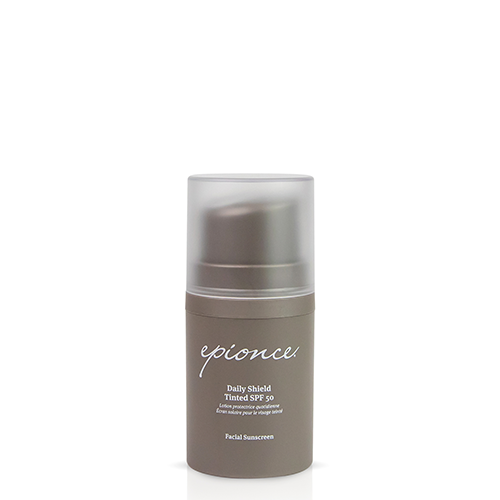
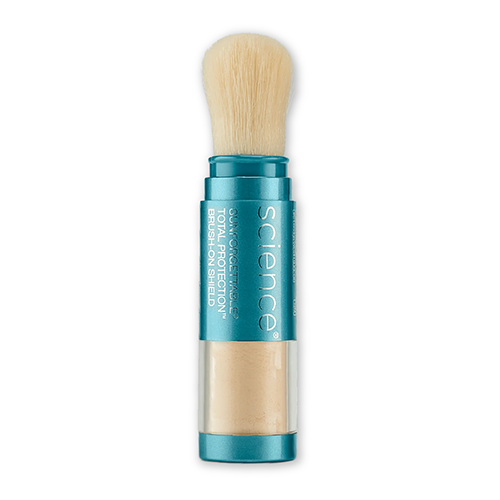
Lifestyle modifications are equally important alongside prescription treatment. Daily mineral SPF, trigger avoidance, and a simplified skincare routine can dramatically reduce how often and how severely rosacea flares.
Building a Rosacea-Friendly Skincare Routine
Keeping things simple and gentle is everything for rosacea-prone skin. Here's what a good routine looks like:
Step 1: Cleanse. Start with a fragrance-free, non-foaming cleanser that won't disrupt your skin barrier. The Hydrinity Prelude Facial Treatment Cleanser is a great option for sensitive, reactive skin.
Step 2: Treat. Focus on barrier-repairing ingredients like ceramides, niacinamide, and hyaluronic acid.
- ZO Rozatrol — clinically tested, gently exfoliates to refine texture and soothe redness
- All Calm Multi-Correction Serum — calms irritation, reduces redness, and boosts hydration
Step 3: SOS Mask (as needed). When skin is especially reactive, reach for the SkinCeuticals Phyto Corrective Masque. Pro tip: Store in the refrigerator for added soothing benefits when applying.
Step 4: SPF (every single day). Mineral sunscreens with zinc oxide or titanium dioxide are better tolerated than chemical filters. The SkinCeuticals Physical Fusion UV Defense SPF 50 neutralizes redness while delivering strong daily protection.
What to avoid:
- Retinols at high concentrations (until skin is stable)
- Fragrance, witch hazel, and alcohol-based toners
- Introducing multiple new products at once — add one at a time and patch test everything
A simple routine almost always outperforms a complex one for rosacea-prone skin.
When to See a Provider for Rosacea
It's time to consult a provider if any of the following apply:
- Redness has persisted for more than a few weeks despite lifestyle changes
- Symptoms are affecting your confidence or daily routine
- Over-the-counter products haven't made a difference after four to six weeks
- Flares are becoming more frequent, redness is spreading, or new pustules are appearing
- Ocular symptoms have developed (eye redness, irritation, or light sensitivity)
Rosacea is treatable, and you don't have to manage it alone. Skin Clique's board-certified providers are available in 40+ states and will build a plan that fits your skin type and lifestyle, with everything delivered straight to your door. Find a provider and get started with a short online questionnaire.
Frequently Asked Questions
Is rosacea permanent?
Rosacea is a chronic condition, meaning it doesn't go away permanently on its own. However, with the right treatment plan, most people can significantly reduce symptoms and keep flare-ups infrequent. Starting treatment early leads to better long-term outcomes and can help prevent the condition from progressing.
What is the best treatment for rosacea on the face?
There is no single "best" treatment because the right approach depends on your subtype, severity, and skin type. For most patients, the most effective combination is:
- Topical prescription treatment
- Trigger management
- A gentle, SPF-focused daily skincare routine
For persistent redness and visible blood vessels, IPL or laser treatments can also be highly effective. Working with a qualified provider to build a personalized rosacea treatment plan is the most reliable path forward.
Can diet affect rosacea?
Yes. The most common dietary triggers include spicy foods, alcohol (especially red wine), and hot beverages. More broadly, an anti-inflammatory diet rich in fruits, vegetables, and omega-3 fatty acids may help support overall skin health. Because triggers are so individual, keeping a food diary is one of the best ways to identify your personal patterns.
Can rosacea be mistaken for acne?
Yes, papulopustular rosacea closely resembles acne and is frequently misdiagnosed. The key differences:
- Rosacea involves persistent facial redness and flushing — acne does not
- Rosacea rarely produces blackheads or whiteheads, which are hallmarks of acne
- Treating rosacea with acne products like benzoyl peroxide or harsh exfoliants can worsen symptoms
Accurate diagnosis from a provider is essential before starting any treatment.
What calms down a rosacea flare-up?
- Cool the skin with a gentle cold compress or cool water
- Strip back your routine to cleanser, fragrance-free moisturizer, and SPF only
- Remove the suspected trigger as quickly as possible
- Apply your topical cream prescription (azelaic acid, metronidazole) as directed
- Avoid touching, rubbing, or applying makeup over an active flare
- If flares are frequent or severe, loop in your provider — it's a sign the treatment plan needs adjustment
Take Control of Your Rosacea
Rosacea is common, chronic, and absolutely manageable with the right plan. The pillars are simple: know your triggers, use appropriate topical medications consistently, build a gentle skincare routine, and protect your skin from the sun every day. You don't have to settle for just coping with flare-ups. You deserve clearer, calmer skin.
Ready to take control of your rosacea? Skin Clique's board-certified providers will build a personalized treatment plan and ship it straight to your door.