If you've been exploring regenerative treatments or researching microneedling add-ons, you may have come across the term Platelet-Derived Growth Factor (PDGF). So what is PDGF, exactly, and why are providers increasingly incorporating it into aesthetic protocols? This guide breaks it all down: the biology, the clinical applications, how it compares to PRP, and what current research supports. Understanding what PDGF is and how it works can help you have a more informed conversation with your Skin Clique provider.
Important note: This article is intended for educational purposes only and does not constitute medical advice. Individual results, treatment suitability, and care plans vary from person to person. Please consult your healthcare provider or connect with a Skin Clique provider to determine whether PDGF is right for you.
Meet the Experts
Dr. Sarah Allen, MD is the Founder and Chief Medical Officer of Skin Clique, the nation's largest aesthetics and wellness practice, trusted by 85,000 patients nationwide. Dr. Allen brings a science-first philosophy to every treatment and product Skin Clique offers.
Kaitlin Stone, DNP is the Director of Telehealth at Skin Clique. As a nurse practitioner with deep expertise in regenerative aesthetics, she works closely with patients to develop personalized care plans rooted in evidence.
Understanding PDGF: The Biology Behind Skin Regeneration
PDGF stands for Platelet-Derived Growth Factor, a naturally occurring protein your body produces as part of its healing process. Platelets respond quickly when tissue is injured, releasing growth factors such as PDGF to initiate the healing process.
On a cellular level, PDGF plays several important roles:
- Signaling and cell proliferation: PDGF activates receptors on nearby cells, signaling them to divide and regenerate damaged tissue.
- Angiogenesis: PDGF supports the formation of new blood vessels, which deliver oxygen and nutrients to areas undergoing repair.
- Collagen production and tissue stabilization: PDGF aids in skin rejuvenation by activating fibroblasts, which produce collagen and promote tissue repair.
In everyday situations, your body naturally utilizes PDGF to heal wounds or injuries. In aesthetic medicine, providers harness this same biological mechanism in a controlled setting, most commonly through microneedling treatments, to encourage the skin to repair and renew itself more effectively. When microneedling creates micro-injuries in the skin, it prompts the body to start the healing process. Incorporating PDGF into the procedure helps reinforce and possibly enhance that reaction.
How PDGF Is Used in Aesthetic Medicine Today
In aesthetic medicine, PDGF is most commonly used topically and is particularly well-suited to microneedling treatments. Microneedling creates controlled microchannels in the skin's surface, which temporarily increases permeability and allows topically applied ingredients to absorb more deeply than they otherwise would.
This is where PDGF shines. Ariessence PDGF, applied to the skin immediately after microneedling, can reach the deeper layers where cell signaling and collagen production actually happen. According to Kaitlin Stone, DNP, Director of Telehealth at Skin Clique, "PDGF works by promoting new cell growth, new blood vessel growth to support the new cells, and stabilizing existing skin support." When combined with microneedling, it enhances wound healing rapidly and effectively, making it a popular choice for patients looking for skin rejuvenation regardless of skin type.
The topical benefits patients and providers often note include:
- Supporting the skin's natural healing process and tissue repair post-treatment
- Potentially reducing downtime compared to microneedling alone
- Improving overall skin texture and resilience over time
- Contributing to smoother, more even skin quality with consistent use
It's worth emphasizing that topical Ariessence PDGF is an adjunct to treatment, not a standalone solution. It works in partnership with your skin's own biology, and results develop gradually over time rather than immediately after a single session.
PDGF vs. PRP: What's the Difference?
Both PDGF and PRP (Platelet-Rich Plasma) involve platelet-derived growth factors, and the two are often confused. But they are different in how they're made, how they work, and what providers consider when recommending one over the other as part of a facial rejuvenation plan.
Dr. Sarah Allen explains it clearly: "Platelet Rich Plasma is not to be confused with Platelet-Derived Growth Factor. While both contain platelet growth factors, PRP depends on the health of the person providing it. PDGF is reliable. It's a recombinant growth factor made in a lab under sterile conditions. This makes it more reliable and much more potent than traditional PRP."
Neither option is universally superior. PRP has a longer track record in aesthetic medicine and may appeal to patients who prefer treatment made entirely from their own biology. PDGF provides more consistency, particularly for patients whose health status could affect PRP's potency. Your Skin Clique provider can help you weigh which approach aligns best with your goals, skin type, and overall health.
Clinical Research and Evidence in Platelet-Derived Growth Factor
PDGF has a well-established history in wound healing and regenerative medicine extending well beyond aesthetics. "Platelet-derived growth factor has been safely used in other facets of medicine since 1999 with the introduction of Regranex, a product that improves wound healing," says Dr. Allen. "In 2005, GEM21S received approval for periodontal disease as a bone grafting material. In 2015, platelet-derived growth factor received approval in the form of AUGMENT, used by orthopedic colleagues as a bone graft substitute."
This history provides a meaningful foundation of safety data for PDGF as a compound. Research specifically supporting topical cosmetic use is still emerging, though early findings are encouraging! Studies examining PDGF's role in skin repair and collagen synthesis suggest that it may support skin health when used appropriately in aesthetic protocols.
It's important to note that the evidence base for topical cosmetic use is not yet as robust as it is for wound healing applications. Ongoing research is needed to better define optimal protocols, patient selection, and long-term outcomes. Skin Clique backs decisions based on science, emphasizing transparency regarding existing research and areas requiring further exploration.
Who Is a Good Candidate? Safety and the Benefits of PDGF
When used topically, PDGF is generally well-tolerated across skin types. Stone notes that "there aren't any side effects to expect topically," though patients undergoing microneedling may experience the typical post-treatment effects of that procedure, including temporary redness and sensitivity in the treated area. These effects are associated with microneedling itself rather than PDGF specifically.
Patients who may benefit most from PDGF-enhanced microneedling include those focused on:
- Improving fine lines and early signs of aging
- Addressing crepey or uneven skin texture
- Enhancing under-eye skin quality (note: PDGF is not a volume replacement and does not address significant hollowing the way a dermal filler would)
- Supporting skin healing, tissue repair, and overall rejuvenation
As Stone puts it, "really anyone can benefit from this treatment because you are supporting wound healing in a faster and stronger way." That said, treatment suitability is always individualized. Working with a Skin Clique provider ensures your plan is built around your specific skin concerns, health history, and goals.
What to Expect from PDGF-Enhanced Microneedling Treatment
A PDGF-enhanced microneedling session follows a similar structure to standard microneedling, with Ariessence PDGF applied topically during or immediately after the procedure to support the healing process. Most sessions take about 60 to 90 minutes, including preparation and recovery time in the office.
Downtime is typically minimal, with some redness and sensitivity in the days following treatment. Skin quality improvements develop gradually as the skin's natural regeneration process unfolds. Results are generally seen over weeks to months rather than immediately, and a series of treatments may be recommended depending on your individual goals. Your Skin Clique provider will work with you to determine the best treatment plan and post-treatment care for your skin type and rejuvenation goals!

Frequently Asked Questions
Is PDGF safe?
Topical PDGF is considered safe when used as part of a Skin Clique provider-supervised protocol. It benefits from a long history in medical wound healing applications, providing meaningful safety data that supports its use more broadly. As with any treatment, safety depends on proper technique, sterile protocols, and individualized patient assessment. Working with a provider ensures PDGF is used appropriately for your skin!
Who might benefit from PDGF treatments?
Patients focused on skin quality, texture, and tissue repair are often the best candidates for PDGF-enhanced microneedling. Stone describes the ideal patient as someone dealing with "fine lines or wrinkles, wanting to decrease downtime, or looking to stabilize their skin from the inside out." PDGF can be a meaningful addition to other treatments for patients working toward more youthful skin, though it is not a replacement for dermal fillers or surgical interventions when volume loss or structural changes are the primary concern. A consultation with a Skin Clique provider is the best way to clarify whether PDGF fits into your care plan.
What are the side effects of PDGF treatments?
Topical PDGF itself is not associated with significant side effects. Any redness, sensitivity, or mild irritation after a PDGF-enhanced microneedling treatment is typically related to the microneedling procedure rather than the PDGF. These effects are temporary and generally resolve within a few days. As with any aesthetic treatment, outcomes and experiences vary from patient to patient, which is why individualized care and provider oversight matter.
What are PDGF injections?
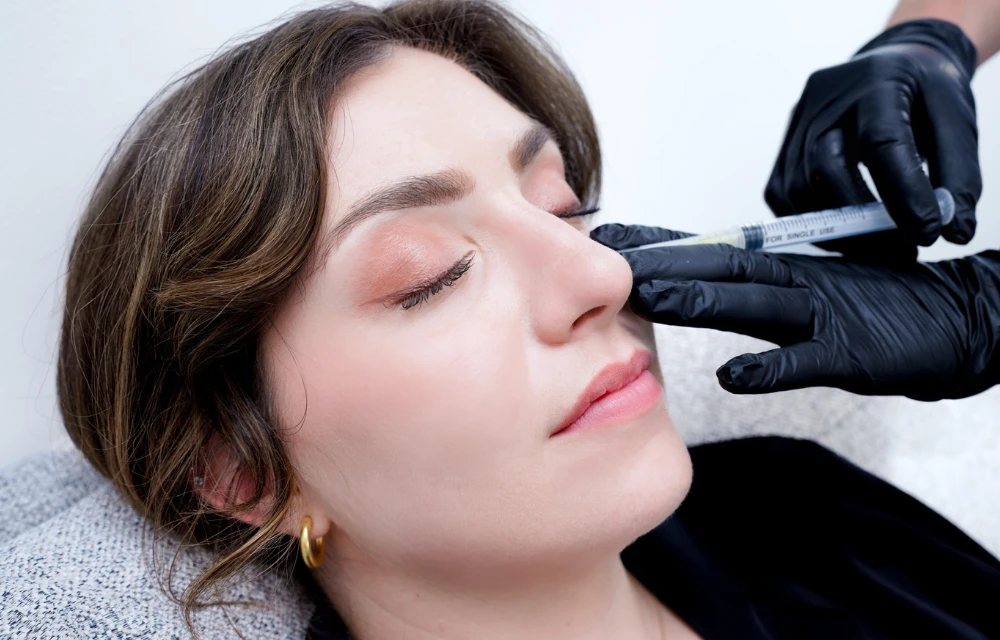
PDGF injections, such as those using Ariessence PDGF, are a separate application from topical use and are currently considered off-label in aesthetic medicine. Adverse events are noted in the 1 in 10,000 range, making serious complications quite rare when the product is used thoughtfully and with proper technique. Dr. Allen notes that Skin Clique is proud to be under consideration for a registry study and various other clinical trials currently underway. As with any emerging treatment, it's important to have an open conversation with your Skin Clique provider about the current state of the research, what to expect, and whether it's appropriate for your goals.
Is PDGF approved by the FDA?
PDGF has received FDA approval for specific medical applications. As Dr. Allen explains, "PDGF is approved in a few forms by the FDA, namely in GEM21S, which treats periodontal defects." In aesthetic medicine, the cosmetically available form is not currently FDA-approved for injection, and its topical cosmetic use varies by formulation and protocol.
Providers who use PDGF in aesthetic settings do so within a framework of off-label application, which is legal and common in medical practice, but it does place greater importance on provider discretion, patient education, and individualized decision-making. When discussing any treatment with your Skin Clique provider, be sure to ask about its regulatory status and what the current research supports.
The Key Takeaway
PDGF, or platelet-derived growth factor, represents a meaningful development in science-backed skin rejuvenation and regenerative skincare. If you've been curious about what PDGF is and whether it belongs in your routine, the answer starts with understanding its roots in wound healing and tissue repair research!
For patients interested in regenerative approaches to more youthful skin, it's a topic worth understanding and discussing with your Skin Clique provider. If you have an interest in PDGF-enhanced microneedling and how it belongs in your skincare plan, schedule a consultation with a Skin Clique provider today!