Aesthetic nursing sits at one of the most rewarding intersections in modern medicine — where clinical precision meets artistry, and where the patients you see are genuinely excited to be there. It is one of the fastest-growing specialties in healthcare, and for good reason. If you are a nurse practitioner, Advanced Practice Registered Nurse, or Physician Associate curious about transitioning into aesthetics, or already on that path and looking for clarity, this guide is for you.
We cover the credentials that matter, how to find the right aesthetic nurse training, how to pursue certification, how to build real clinical experience, and how platforms like Skin Clique support providers in building a career that is both clinically excellent and genuinely fulfilling.
What Is an Aesthetic Nurse Injector?
An aesthetic or cosmetic nurse injector is a licensed advanced practice provider, typically a nurse practitioner (NP), advanced practice registered nurse (APRN), or physician associate (PA), who specializes in cosmetic injectable treatments and other minimally invasive aesthetic services. This is a distinct specialty that requires dedicated training beyond standard licensure.
The scope of practice is broad, spanning neurotoxin injections (such as Xeomin and Dysport), dermal fillers and biostimulators, chemical peels, laser treatments, PDGF, and in-depth skincare consultations. Aesthetic injectors work across medical spas, dermatology clinics, plastic surgeon practices, and concierge platforms like Skin Clique.
One important distinction: scope of practice and independent practice rights vary significantly by state. NPs and APRNs typically have broader prescriptive authority and greater autonomy, making advanced practice credentials especially valuable in aesthetics. Always review your state's nurse practice act before pursuing training or independent practice.
Step 1: Start with the Right Nursing Credentials
The foundation of an aesthetic career is a valid advanced practice license. Most aesthetic nurse injectors hold one of the following:
- NP / APRN (Nurse Practitioner / Advanced Practice Registered Nurse): The most common and versatile pathway into aesthetics. NPs and APRNs have broader prescriptive authority and greater autonomy, making them ideally positioned for independent or concierge aesthetic practice.
- PA (Physician Associate): A well-established pathway with comparable scope considerations depending on the state.
A strong clinical foundation matters before entering aesthetics. Backgrounds in emergency medicine, dermatology, plastic surgery, or critical care build the anatomical knowledge and patient assessment skills that underpin safe, confident practice. Some states also require a physician collaborating agreement for certain provider types performing injections, so verifying your state's nurse practice act is always a smart first step.
At Skin Clique, all providers are board-certified NPs and APRNs, reflecting the clinical standard our organization maintains for patient safety and quality care.
Explore what it means to join Skin Clique as a provider.
Step 2: Complete Specialized Aesthetic Nurse Training
Holding an NP, APRN, or PA nursing license is the essential starting point, but it does not qualify someone to perform injectable cosmetic treatments on their own. Specialized aesthetic training courses are non-negotiable, and the quality of that training matters enormously!
Comprehensive programs cover in-depth facial anatomy, injection techniques for neurotoxins and fillers, patient assessment and consultation, product knowledge, complication recognition and management, and patient safety protocols. Here is what to look for when evaluating your options:
- Live, hands-on courses: The gold standard. Look for nursing programs that include clinical hours with real patients under direct supervision.
- Medical spa preceptorships and mentorships: Working alongside experienced providers in a real clinical setting is invaluable for building injection confidence.
- Manufacturer training programs: Companies like Allergan, Galderma, and Merz offer injector training for licensed providers. These are useful supplements, not standalone qualifications.
- Online coursework: Helpful for foundational anatomy and product knowledge, but must be paired with supervised, in-person clinical hours.
Watch out for programs with no live patient component, no supervision structure, or no complication management curricula. Most foundational courses run one to five days, but building true clinical competence takes months of supervised practice.
Skin Clique Academy: An Industry-Leading Starting Point
For providers who want to begin with a credential they can be proud of, Skin Clique Academy offers one of the most rigorous neurotoxin training programs available. All Skin Clique providers begin their aesthetic career at Skin Clique Academy for neuromodulator training, and the course is also open to any qualified clinician pursuing it independently.
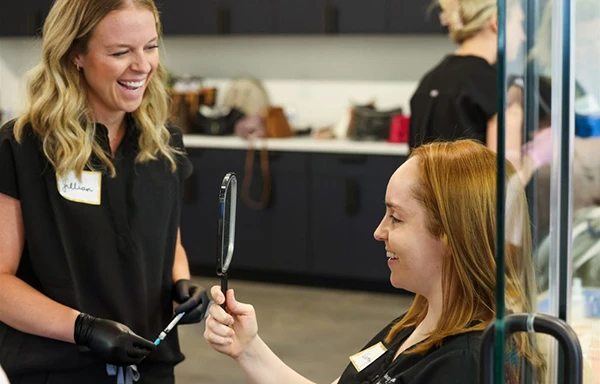
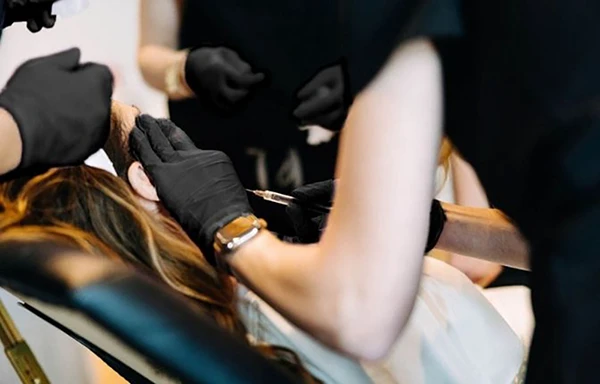
Every participant injects five live patient models during a full seven-hour training day — five times the industry standard for neurotoxin training! A 2:1 trainee-to-trainer ratio ensures every injection happens under individualized expert supervision with real-time feedback. Pre-course online modules are included, and the full program awards 10.75 hours of CME credit, with 3.75 of those hours earned before the live training day begins.
For board-certified NPs, APRNs, PAs, and MDs/DOs ready to enter aesthetics or sharpen their injection skills, it is one of the strongest starting points in the field. Learn more about Skin Clique Academy.
Step 3: Pursue Aesthetic Certification
No single national certification is universally required, but recognized credentials signal commitment to the field and are increasingly expected by employers and practice partners. The most widely recognized options include:
- CANS (Certified Aesthetic Nurse Specialist): Offered by the PSNCB, the CANS requires nursing licensure, documented clinical experience, and a written exam. It is the benchmark credential in aesthetic nursing.
- CPSN (Certified Plastic Surgical Nurse): Also from the PSNCB, covering plastic and reconstructive nursing alongside aesthetics.
- AANP or ANCC certification (for NPs): Ensures NP credentials remain current and in good standing.
- BLS / ACLS certification: Non-negotiable for any provider performing injectable or invasive treatments.
Requirements vary by employer and state, and the field evolves quickly. Ongoing CME hours in aesthetic medicine should be a regular part of your professional life, not an afterthought.
Step 4: Build Clinical Experience in Aesthetics
Specialized training provides the foundation. Experience builds the competence and confidence that define a truly skilled injector. Early in your career, prioritize environments that offer volume, variety, and mentorship — whether that means working at a medical spa, joining a physician-supervised practice, shadowing experienced injectors, or joining a platform like Skin Clique that actively supports providers who are new to aesthetic medicine.
A few principles that matter early on:
- Volume and variety: Injection technique improves with repetition across different patients, skin types, and treatment areas.
- Document your clinical hours: Many certification bodies and employers require a minimum number of documented hours in aesthetic procedures.
- Mentorship is not optional: Learning from experienced providers accelerates growth and helps new injectors navigate complex cases safely.
At Skin Clique, providers work within a collaborative network of board-certified peers and have access to ongoing clinical guidance — an environment where confidence builds steadily. Learn more about the Skin Clique clinical education program.
Why Aesthetic Nursing Is a Rewarding Career
Aesthetic medicine offers something genuinely rare in clinical practice: the chance to rediscover the joy that first drew you to healthcare. Your patients are motivated, engaged, and happy to see you. You are using your procedural skills every day. And when someone walks out feeling like the most confident version of themselves, that feeling does not get old.
Beyond the patient experience, the career itself offers real advantages:
- Flexibility: Many aesthetic NPs and APRNs work part-time, build their own client base, or operate within concierge models that offer genuine schedule autonomy.
- Growing demand: The medical aesthetics industry continues to expand rapidly. Skilled, board-certified injectors are in high demand across the country.
- Strong earning potential: Experienced aesthetic nurse injectors often command meaningfully higher compensation than traditional nursing roles.
For providers who have felt stretched thin or disconnected from their work, aesthetic medicine is often where medicine starts to feel the way it was supposed to feel.
Explore provider opportunities at Skin Clique.
Why Skin Clique Is a Great Home for Aesthetic Providers
Skin Clique is the nation's largest clinician-led aesthetic and wellness practice, built specifically to support providers at every stage of their aesthetic career. Whether you are just starting and want a structured, mentored environment, or you are an experienced injector ready to grow your practice without medspa overhead, Skin Clique offers a model designed around you.
Board-certified NPs and PAs deliver treatments directly to patients — in-home, at group events, or wherever it is most convenient for the patient — with administrative infrastructure, marketing, and operational support already in place. Providers gain flexible scheduling, access to a growing patient base, a collaborative community of board-certified peers, and ongoing clinical mentorship through the Skin Clique clinical education program.
But the practical benefits are only part of the picture. What Skin Clique offers that is harder to quantify is the chance to practice in an environment where patients are genuinely excited to see you, where your clinical skills are put to their best use, and where helping someone feel like the best version of themselves is simply part of the job.
As Dr. Sarah Allen, Founder and Chief Medical Officer of Skin Clique, puts it: "We built Skin Clique because we believe providers deserve a career that gives back as much as they give. When you are seeing patients who are genuinely happy to be there, using your skills to help them feel like the best version of themselves, and doing it within a community of talented clinicians who support each other — that is when medicine feels the way it was always supposed to feel. That is what we are building here."
Learn more about joining the Skin Clique provider community.
Frequently Asked Questions
Do you need to be a nurse to become an aesthetic injector?
In most states, yes. Performing cosmetic injectable treatments requires a valid medical license. Eligible providers typically include NPs, APRNs, PAs, MDs, and DOs. Estheticians and cosmetologists are not licensed to perform injections in any U.S. state. Always verify your state's nurse practice act before pursuing training or independent practice. Skin Clique specifically requires board-certified NPs and PAs.
What qualifications do you need to be an aesthetic injector?
A valid advanced practice license is the baseline. Beyond that, specialized aesthetic training with a hands-on, supervised clinical component is essential. Skin Clique requires board-certified NPs and PAs — and if you are ready to enter aesthetics with real hands-on training experience, Skin Clique Academy is designed specifically for providers like you.
How long does it take to become an aesthetic nurse injector?
If you are already licensed as an NP or PA, foundational aesthetic training can begin right away. Initial courses run one to five days; building clinical competence typically takes six to twelve months of supervised practice. A motivated provider can begin practicing aesthetics within a few weeks of completing advanced training, while building a thriving aesthetic career generally takes one to two years of experience and consistent practice.
Is aesthetic nursing safe to practice independently?
Safety in aesthetic practice comes from rigorous training, ongoing education, and operating within your clinical scope. Independent practice rights vary by state — some grant NPs and APRNs full practice authority, while others require a collaborating physician agreement. All aesthetic providers should be trained in complication recognition, maintain current BLS and ACLS certification, and have clear emergency protocols in place. Platforms like Skin Clique provide structural support and a collaborative provider community that reinforces safe, high-quality practice.
How do I find aesthetic nursing jobs or opportunities?
Traditional paths include medical spa employment and dermatology or plastic surgery practice roles. Concierge platforms like Skin Clique offer an alternative model where NPs and PAs can build their practice with built-in infrastructure and support. Professional networks, including AANP and aesthetic nursing associations, also offer job boards and peer connections. The Skin Clique provider community is actively growing — board-certified NPs and PAs are encouraged to apply directly.
The Path Forward
Becoming an aesthetic nurse injector is one of the most meaningful moves a clinician can make. The pathway is clear: the right advanced practice credentials, specialized aesthetic training, recognized certification, and deliberate experience-building within a supportive environment. Each step builds on the last.
If you are a board-certified NP or APRN ready to bring your skills into aesthetic medicine, Skin Clique is built for providers like you. We are growing, and we are looking for clinicians who are passionate about aesthetic medicine, patient care, and the freedom to practice on their own terms. Connect with us to learn more.